
Companion Planting in the Florida Garden
Companion planting is a simple way for Florida homeowners to create a diverse and productive garden. By combining vegetables, herbs, and flowers with similar growing needs, you can attract beneficial insects, maximize space, add beauty, and support a healthier garden ecosystem.
Florida’s warm climate provides homeowners with an excellent opportunity to grow vegetables, herbs, flowers, and fruit throughout much of the year. One way to make the most of your garden space is through companion planting—the practice of growing different plants together that complement one another.
While companion planting isn’t a guaranteed solution for every pest or gardening challenge, thoughtful plant combinations can help create a more diverse and attractive landscape.
What Is Companion Planting?
Companion planting involves placing plants with different characteristics near one another. Some gardeners use the technique to attract beneficial insects, provide shade, make efficient use of space, or simply create a healthier garden ecosystem.
For Florida homeowners, companion planting can be especially useful because the state’s long growing season and warm temperatures support a wide variety of plants—but those same conditions can also encourage weeds, insects, and plant diseases.
Pair Vegetables With Herbs and Flowers
Adding herbs and flowers to a vegetable garden is one of the easiest ways to experiment with companion planting. Basil, for example, can be grown alongside tomatoes and peppers while providing an aromatic addition to the garden.
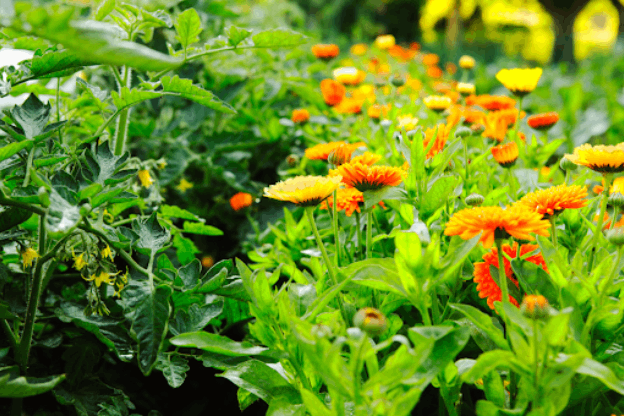
Flowers such as marigolds, zinnias, and sunflowers can add color while attracting pollinators and other beneficial insects. Herbs such as dill, parsley, and cilantro can also provide resources for beneficial insects when allowed to flower.
Rather than relying on one plant to solve a pest problem, think of your garden as a diverse ecosystem. A mixture of plants can provide food and shelter for pollinators and predatory insects.
Consider Florida’s Growing Conditions
Successful companion planting starts with choosing plants that can thrive in the same environment. Florida gardens may experience intense sunlight, high humidity, heavy rainfall, sandy soils, and periods of drought.
Group plants according to their basic needs. Sun-loving vegetables should generally be planted where they receive adequate light, while shade-tolerant plants can be positioned beneath taller crops or trees when appropriate.
Water requirements matter, too. Combining plants with similar irrigation needs can make maintaining your landscape easier and help prevent overwatering or underwatering.
Make the Most of Your Garden Space
Companion planting can also help homeowners maximize limited garden areas. Taller plants can provide structure or partial shade for shorter plants, while ground-level crops can fill spaces between larger plants.
Consider combining upright crops with low-growing herbs or flowers to create layers of vegetation. Just be careful not to overcrowd plants. Florida’s humidity and frequent rainfall can create conditions where poor air circulation encourages fungal and bacterial diseases.
Start Small and Observe
There is no need to redesign your entire landscape to try companion planting. Start with a small vegetable bed or container garden and experiment with a few compatible plants.
Observe which plants perform well together, which attract pollinators, and where pest problems occur. Keep in mind that companion planting works best as one part of an overall garden-management strategy that includes proper watering, soil preparation, pruning, and pest monitoring.
With thoughtful planning, companion planting can make your Florida garden more productive, colorful, and welcoming to beneficial wildlife. By combining vegetables, herbs, flowers, and Florida-friendly plants, homeowners can create a diverse landscape that is both beautiful and functional.
Add a Comment